

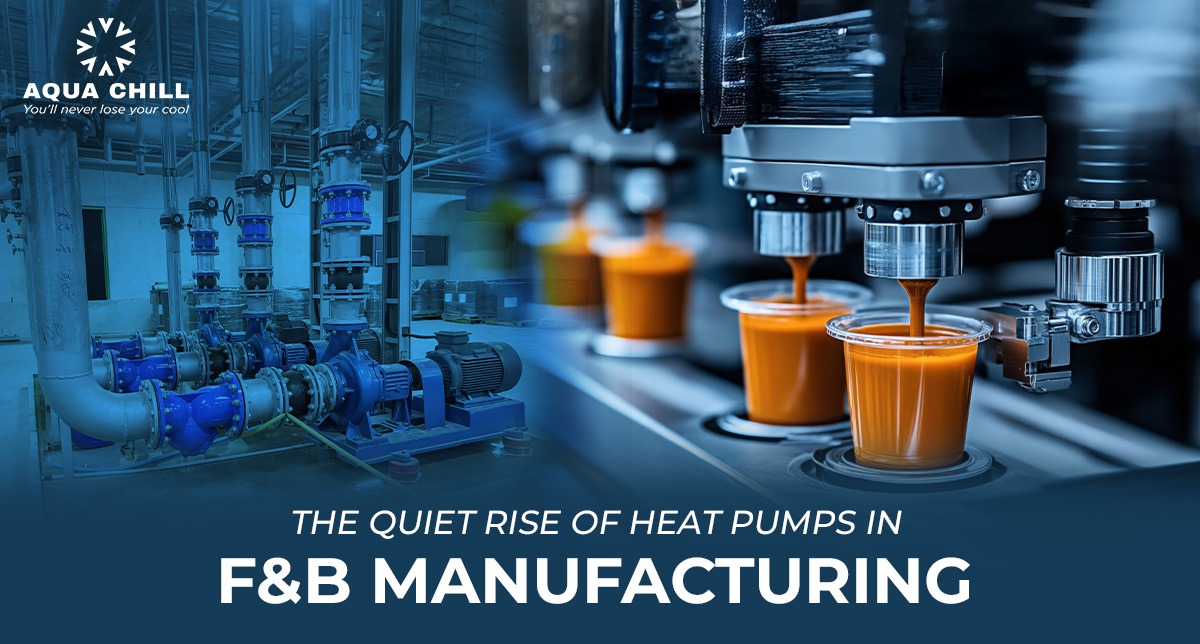
India’s food and beverage (F&B) sector is quietly undergoing an energy-efficiency transformation. Driven by rapid growth, tighter sustainability standards, and rising demand for process heat and cooling, the industry is now embracing advanced heat pump technologies at an accelerating pace. From manufacturing and cold storage to industrial kitchens, India is emerging as a fast-growing market for these clean and efficient solutions.
The Energy Challenge Facing F&B Manufacturing
India’s F&B producers are among the country’s most energy-intensive businesses. Processes such as pasteurisation, refrigeration, drying, and cleaning require significant amounts of heat.
Traditionally, these operations have relied on steam boilers —leading to high costs and substantial carbon emissions.
Now, rising grid prices, new emissions targets, and global supply chain decarbonization mandates are pushing manufacturers to seek cleaner, more cost-effective alternatives. This is precisely where industrial heat pumps are proving to be an attractive solution.
Why Heat Pumps Make Sense for Indian F&B Utilities
So, what makes heat pumps a viable alternative for the Indian food and beverage industry?
Heat pumps optimize both heating and cooling by transferring and upgrading waste heat within the plant. Compared to traditional boilers and chillers, they can achieve up to 200-300% operational efficiency in many F&B processes.
Key benefits include:
- Up to 57% energy savings: Modern industrial heat pumps in Indian applications have reduced energy use by as much as 50% for process heating and hot water.
- Lower operating costs: With reduced fuel spend and maintenance, facilities—especially those operating 24/7—see a strong return on investment.
- Regulatory compliance: Upgrading to heat pumps helps manufacturers meet government and international emission standards—critical for exporters and large MNCs.
Innovations Powering India’s Heat Pump Revolution
To meet local industry needs, India’s heat pump sector has rapidly evolved with innovations tailored for sustainability and cost-effectiveness.
Supported by favourable electrification policies, the market is expanding, led by engineering firms such as Energeia and Aqua Chill that specialize in industrial-grade retrofits.
- Air-source heat pumps (ASHPs) currently dominate the market, accounting for 72% of revenue in 2024. They are affordable, efficient, and ideal for India’s urban and industrial clusters with mild winters and limited space.
- Hybrid heat pump systems that integrate rooftop solar PV are being piloted in plants across Hyderabad and Nagpur, reducing energy bills by nearly 50% while maintaining temperature stability.
- High-temperature heat pumps (up to 160°C) are now serving sterilization, pasteurisation, and drying applications—especially in large beverage and ready-to-eat (RTE) facilities.
- IoT and AI-based controls are being integrated into beverage bottling and bakery operations, enabling predictive energy management, load optimization, and product safety assurance.
Emerging Trends Shaping 2025 and Beyond
- High-temperature pumps reaching up to 120°C for sterilization and drying
- Greener refrigerants with low global warming potential (GWP)
- Smart grid integration and AI-based thermal balancing
- Modular, containerised heat pumps for rapid industrial scaling
As these technologies become cost-competitive, heat pumps will move from pilot projects to mainstream adoption across processing plants.
Industrial Applications in India: Success Stories
Across India, food and beverage plants are realizing significant benefits from heat pump deployment:
- Beverage factories: Reduced annual diesel consumption by hundreds of tons after switching to dual-fuel heat pump systems, saving over ₹60 lakh in energy costs.
- Cold storage and dairy processors: Reported 40–50% lower electricity bills and substantial carbon emission reductions within two years of retrofit.
- Large-scale kitchens and food clusters: Using modular heat pumps for cooking, cleaning, and cooling—minimizing downtime and emissions simultaneously.
Key Challenges to Growth
It isn’t roses all the way – some hurdles need to be overcome before heat pumps can become an integral part of the industry.
- High upfront costs and limited financing: Retrofitting can be expensive, and financing options remain limited, especially in Tier 2 and Tier 3 cities.
- Shortage of skilled technicians: Training programs are still catching up with the pace of technology adoption.
- Limited awareness: There is a lack of credible information on heat pump benefits – this is a hindrance outside major metros.
- Complex retrofits: Older plants often require design modifications to achieve expected savings.
However, government initiatives and manufacturer programs are addressing these gaps through targeted funding, skill development, and affordable prefabricated modules.
The Way Forward
The Indian heat pump market is projected to exceed $4 billion by 2030, with industrial process heat pumps—especially in the food and beverage sector—driving the fastest growth.
Southern states and urban clusters lead the way, supported by strong installer networks and progressive energy policies.
As clean energy goals and global supply-chain mandates tighten, F&B companies investing in heat pumps will find it easier to achieve sustainability targets, lower costs, and strengthen their competitive position.
Wrapping Up
For India’s F&B manufacturers, adopting heat pump utilities is a forward-thinking strategy that enhances energy efficiency, ensures compliance, and improves long-term profitability.
The rise of industrial heat pumps, though quiet, is a defining moment in India’s journey toward net-zero manufacturing. Combining renewable power with smart thermal management, this technology is no longer a future vision; it’s a scalable, proven, and profitable reality for today’s sustainable food and beverage industry.
If you wish to learn more about heat pumps, do drop the Aqua Chill team a DM. We shall be happy to assist you.